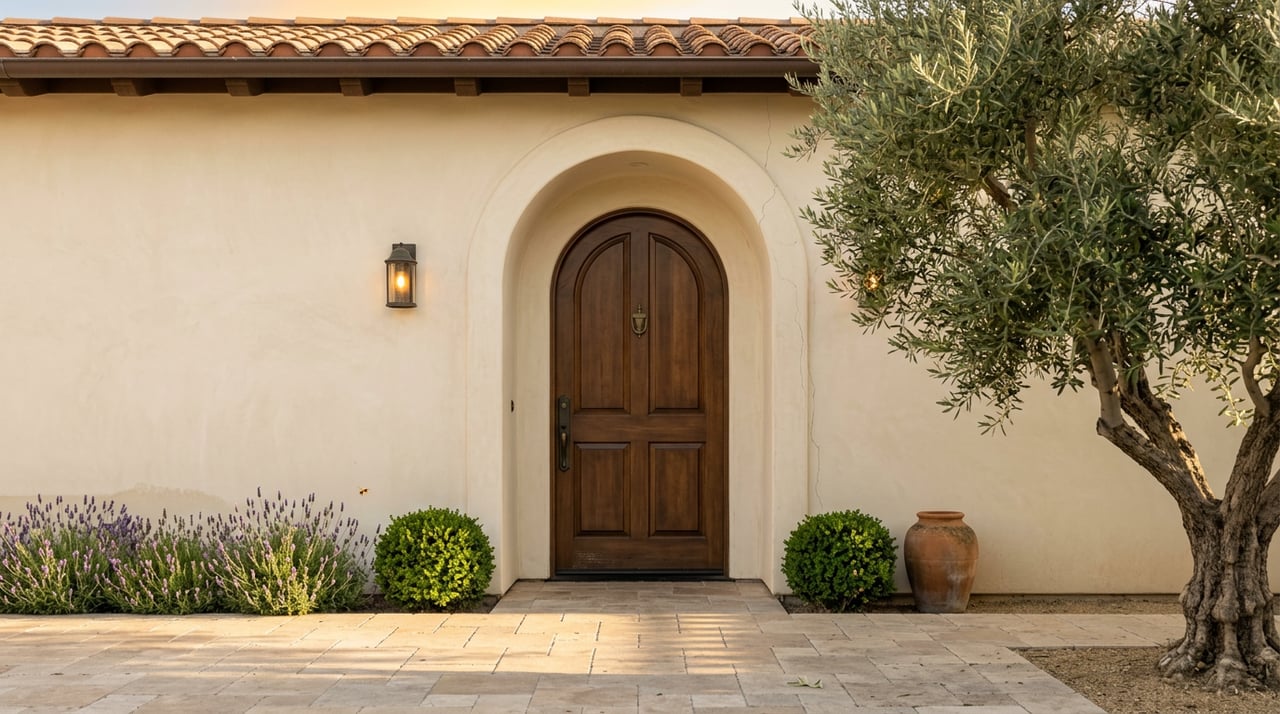
Two five-acre listings a quarter mile apart. Both are priced within $50,000 of each other. One is a straightforward country home with a pool. The other comes with a deed restriction that requires 75% of the parcel to stay planted in vineyard, forever, at the owner's expense. Nothing in the MLS description flags the difference, and nothing in the median-price data on the portals will either.
That is the puzzle at the center of buying in Temecula Wine Country. The number that matters is not the list price. It is the zoning designation printed on the parcel, and the obligations that ride with it.
The zoning layer the listing photos don't show you
Wine Country parcels sit inside a specific overlay in the Riverside County code called the Wine Country Zones, Chapter 17.142. Within that overlay, three sub-zones do most of the work:
- WC-R (Wine Country Residential). Single-family use, minimum residential lot size of one gross acre, with tighter rules for anything subdivided. This is where the majority of resale homes sit.
- WC-W (Wine Country Winery). The commercial layer. Wineries, tasting rooms, special occasion facilities, and lodging up to two guest rooms per gross acre. Homes exist here, but they share the parcel with an operating or entitled winery.
- WC-WE (Wine Country Winery Existing). Legacy wineries that predate the current ordinance, carrying grandfathered rights around incidental commercial uses like restaurants, resorts, and event facilities.
The R and W designations look almost identical on a map. They behave very differently at the closing table. A WC-W property with an approved winery entitlement carries production obligations: for entitlements approved after Ordinance 348.4818, at least 50% of the wine sold on site must be produced there, and at least 75% of the grapes used must be grown in Riverside County. Buy the parcel, buy the requirement.
The 75% rule, and why it survives every sale
Here is the mechanism most Wine Country buyers miss until due diligence. Any clustered subdivision inside the WC zones has to set aside 75% of the net project area as vineyard, either through deed restriction or by structuring the parcel as a dedicated production lot. Half of that vineyard has to be planted before the first house gets a building permit. The remaining quarter has to be in before final inspection.
Those requirements do not evaporate when the original developer sells. They attach to the land. When you inherit a parcel inside a clustered project, you inherit the deed restriction and the ongoing cost of keeping the vines in production. Water, pruning, replanting, disease management, and the yield expectations that come with a working vineyard become part of your carrying cost, whether you drink wine or not.
That is the split that makes two similarly priced listings so different. A one-acre WC-R lot that sits outside a clustered subdivision carries no vineyard obligation. A one-acre WC-R lot inside a clustered project of the same price carries a permanent one. The photos look the same. The math does not.
Rezoning is still reshaping the map
Wine Country's boundaries are not settled. The Board of Supervisors is still voting parcels in and out of the overlay one at a time. On January 28, 2025 the board voted 5-0 to rezone a 5.05-acre parcel from Residential Agriculture 2½ Acre Minimum (R-A-2½) to WC-W, unlocking winery-tier uses on land that had been strictly residential-agriculture the day before. A separate 2025 submittal moved APN 951-190-015, a 2.14-acre parcel, from R-A-2 to WC-R.
For a buyer, these actions matter for two reasons. First, they widen the pool of parcels that carry WC obligations, which slowly changes the character of what "Wine Country" means in a comp set. Second, they signal that the county is still enforcing the policy area's rural design guidelines, including underground utilities on new development, dark-sky compliant lighting, and rural rather than suburban parking and streetscape standards. Development pressure is real, but the design guardrails are holding.
Reading the 2026 numbers through this lens
The portal medians for Temecula do not isolate Wine Country cleanly, but the shape of the market is legible if you know where to look.
| Metric | Reading | Time window |
|---|---|---|
| Temecula median sale price | $740,000, up 4.23% year over year | April 2026 |
| Temecula sale-to-list ratio | 100.1%, with well-priced homes going pending in 7 to 14 days | April 2026 |
| SW Riverside days on market (sub-$800K resale) | Dropped from 50 to 33 days, a 34% improvement | June 2026 MLS |
| SW Riverside price per square foot (same segment) | Rose from $311.42 to $326.21, up 4.8% | June 2026 MLS |
| Average build in Wine Country vs county | ~3,050 sq ft vs 2,179 sq ft county average | 2026 |
Two things are worth pulling out. First, the sub-$800K segment where the June 2026 SW Riverside data sits is not really the Wine Country market. Wine Country homes typically clear that ceiling on square footage alone. The sub-$800K data is the floor beneath Wine Country, and that floor is rising. When entry-level Temecula tightens, buyers who need land, privacy, and views push up into Wine Country, which is one reason local market reporting has flagged Wine Country and Crown Hill as leading Temecula in price appreciation this cycle.
Second, the 3,050 square foot average is not a status symbol. It is a function of the zoning. One-acre minimums and 75% vineyard set-asides push what remains of the developable footprint into a single, larger house rather than a cluster of smaller ones. You are paying for a house sized to the residual buildable area of a parcel that is mostly required to grow grapes.
The land under the zoning still decides value
Everything above sits on top of the older question that governs every rural sale in Southwest Riverside: is the land usable, and what does it cost to keep it working. Well yield and static water level, septic type and leach field siting, slope and pad location, easements for shared driveways and agricultural water lines, and whether existing solar is owned or leased all move the number more than any cosmetic upgrade. On a WC-R parcel with a producing vineyard obligation, water availability is not a lifestyle question. It is an operating question.
The buyer who does well in this submarket is the one who orders the well report and the county zoning letter before falling in love with the pool.
FAQ
Can I take out the vineyard on a WC-R clustered lot if I don't want to farm? Not unilaterally. If the vineyard requirement was recorded against the lot through a deed restriction as part of the original clustered subdivision approval, removing it is a discretionary action that runs through the county. Assume the obligation stays with the land until a county filing proves otherwise.
Do WC-W properties automatically come with a working winery? No. WC-W is the zoning classification. An operational winery requires a separate entitlement, and the production and grape-sourcing requirements attach to that entitlement, not to every WC-W parcel. Some WC-W lots are entitled and operating, others are entitled and dormant, others are zoned but never developed. Each configuration prices differently.
Is Wine Country inside the city of Temecula? No. The Wine Country Policy Area is unincorporated Riverside County. That changes which agency handles permits, code enforcement, road maintenance, and disclosure requirements, and it is why the Temecula Municipal Code does not govern most of these parcels. County planning does.
Why does the average house here run over 3,000 square feet? The zoning pushes it that direction. One-acre minimums, low overall density, and vineyard set-asides on clustered projects concentrate the buildable envelope into fewer, larger homes. That is baked into the price per square foot before any finish level is considered.
The reason Wine Country pricing rewards local expertise is that the entitlement history of a parcel is doing at least as much work as the improvements on it. A comp pulled from a portal that treats a WC-W parcel and a WC-R clustered lot as interchangeable will mislead the buyer and the seller equally.
If you are weighing a Wine Country purchase or getting ready to list an acreage property, Abundance Real Estate can pull the zoning letter, parse the deed restrictions, and price the parcel against comps that share its actual entitlement profile, not just its acreage. Schedule a consultation before you write the offer.