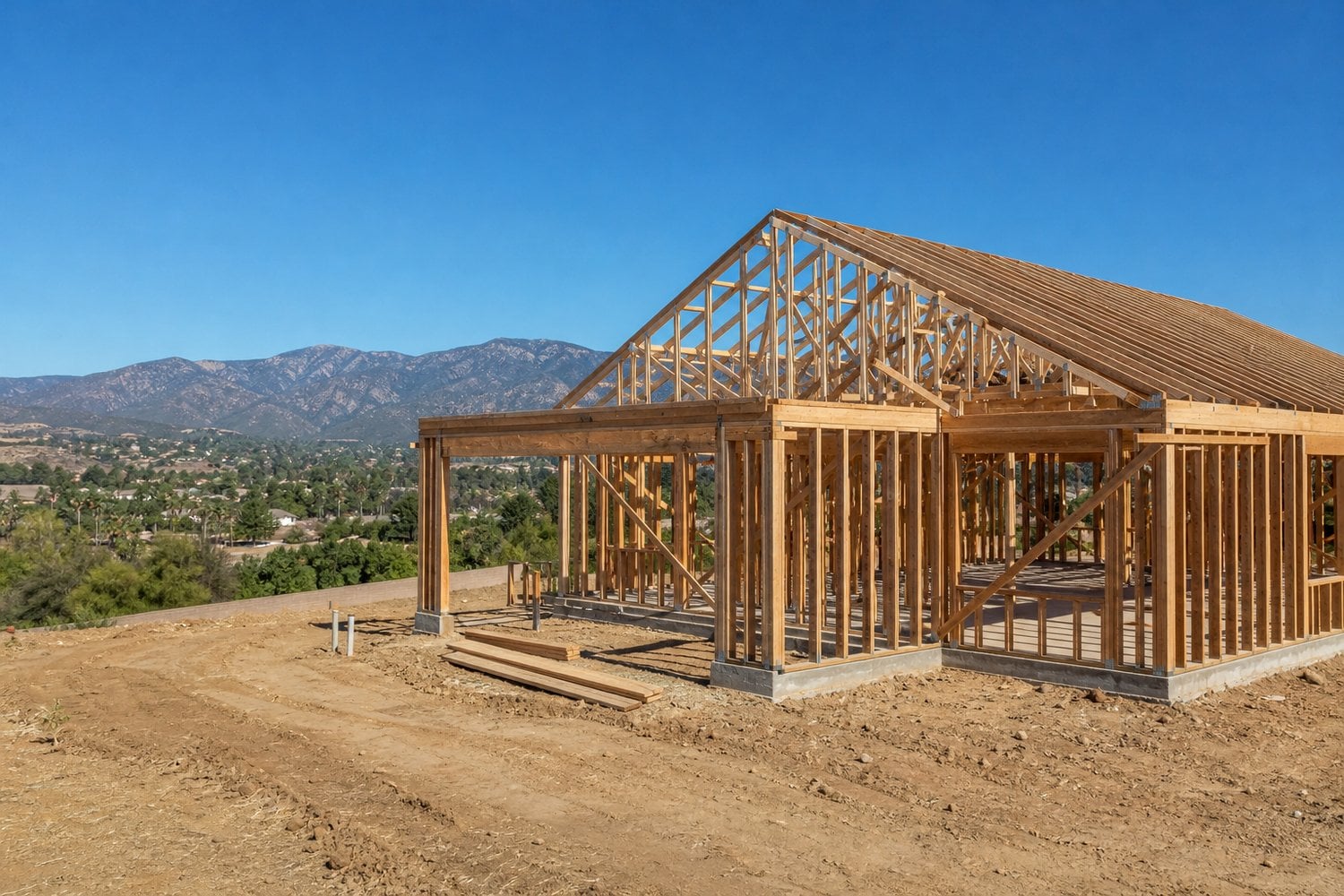
What do buyers regret most about new construction in Temecula, Murrieta, and Menifee?
Buyers of new construction in Temecula, Murrieta, and Menifee most often regret the gap between the advertised starting price and what the contract actually costs and requires. Lot premiums, design-center options, special taxes, HOA dues, a loose completion date, and skipped inspections are the usual culprits. Every one of them is documented somewhere before you close, so the fix is knowing which documents to read before you commit.
Key Takeaways
- The number that matters is the contract price for your specific homesite and selected options, not the lowest "starting from" price on the builder's website.
- Menifee reports that 34 developments have been annexed into its citywide maintenance CFD, so special taxes are common on new builds and must be checked parcel by parcel.
- A special tax can vary year to year under the district's formula, up to an authorized maximum, so one year's amount is not a permanent figure.
- A new home still deserves independent inspections, ideally pre-drywall (when access is allowed), at final walk-through, and during the warranty period.
- A sales representative's verbal completion estimate means nothing unless the contract makes it binding.
What does new construction in Temecula really cost beyond the advertised price?
It costs whatever your signed contract says for the homesite, the structural options, and the design selections, and that total is usually well above the "starting from" figure. The base price covers a basic version of a floor plan, often not the one on the model row.
When I sit down with buyers touring new communities in Temecula, Murrieta, and Menifee, the first thing I do is separate the price into pieces. You should be able to see each of these as its own line:
- Homesite or lot premium. Is it charged on top of the base price, and what drives it (location, size, view, orientation)?
- Structural options. Extra bedrooms, expanded patios, garage changes, and similar items.
- Design-center selections. Flooring, cabinets, countertops, fixtures, and lighting.
- Electrical, appliance, and energy items. Including any solar or energy equipment.
- Exterior items. Landscaping, fencing, and window coverings, which are often not included.
- Model-home features that are not standard. What you toured is rarely what the base price delivers.
If solar is part of the package, I review that agreement separately. Solar contract review is a specialty of mine, and it is a different document from your purchase agreement.
How should you review the builder's purchase agreement?
Read it as a contract, not a brochure, because terms vary by builder and community. I can't point you to one statewide rule that sets a standard inspection schedule, upgrade-pricing structure, completion deadline, or cancellation period for builder contracts. Those terms live in that builder's purchase agreement and addenda for that community, so you have to read them.
Remember who is across the table. The sales representative works for the builder. That doesn't make them dishonest, but it does mean the contract language, not the conversation, is what protects you.
The table below is the checklist I use with buyers before they sign anything.
| Item | What to confirm in writing | Where it is documented |
|---|---|---|
| Homesite premium | Whether it is separate from the base price and what drives it | Purchase agreement and homesite addendum |
| Design-center options | Itemized selections and how change orders work | Options addendum and change orders |
| Completion date | Delay, extension, notice, and cancellation provisions | Purchase agreement |
| Special taxes | Maximum tax, escalation formula, and expiration or bond-retirement terms | District documents and the county tax bill |
| HOA | Budget, governing documents, projected assessments, and initiation or transfer charges | HOA document package |
| Warranty | Covered items, exclusions, and how to submit a claim | Builder warranty booklet |
What happens if the builder misses the estimated completion date?
What happens depends on the contract, so treat the completion date as a contract issue, not a sales promise. Look for the builder's provisions on construction delays, notice of completion, extensions, deposits, and your cancellation rights.
The part buyers overlook is the lender side. If your rate lock expires before the home is ready, you can end up paying to extend it or re-pricing the loan. Ask your lender how a delay would affect your lock before you sign, and ask what happens if you can't close on the original estimate.
This is exactly the kind of question I walk my clients through before they put down a deposit. The earlier you ask it, the more leverage you have.
How do special taxes and HOA dues change the monthly cost of a new-build home?
They can add recurring charges that don't show up in the price or in a resale listing next door, so you need the exact parcel's tax breakdown. Newer communities in Southwest Riverside County often carry special districts on top of ordinary property tax.
What is a CFD or Mello-Roos, and how do I find out if my new home has one?
A Community Facilities District (CFD), commonly called Mello-Roos, is a special tax that appears as a separate item on your property-tax bill. Riverside County's Assessor-County Clerk-Recorder notes that these districts are commonly found in large, newer subdivisions and can finance things like streets, water and sewer systems, utilities, schools, parks, and libraries.
Here is what the local sources show:
- The City of Menifee's special districts page lists several types that can add charges beyond ordinary city services: Lighting, Landscape and Maintenance Districts, Community Service Areas, and CFDs.
- Menifee says new developments may be annexed into a citywide maintenance CFD covering items like street lighting, road and landscape maintenance, street sweeping, parks, trails, and graffiti removal. As of its latest update, the city reports 34 developments had been annexed.
- On the Temecula side, the City of Temecula's debt-management page identifies CFDs involving communities including Harveston, Wolf Creek, Crowne Hill, Roripaugh Ranch, Heirloom Farms, Altair, and Prado.
A subdivision name is not enough. A single new home may sit in a CFD, a landscape and lighting district, a service area, or more than one, and a neighboring phase may not carry the same obligations. Verify the specific parcel.
Can a special tax or HOA assessment go up after I buy?
Yes, either one can change. Menifee's annual CFD report explains that the amount collected can vary from year to year under the district's formula, subject to the authorized maximum. The figure on this year's bill is not proof of what you'll pay in year five.
Before you remove contingencies, ask for these documents:
- The district's formation resolution
- The Rate and Method of Apportionment
- Current annual levy information
- The maximum authorized tax and any escalation formula
- Repayment or expiration provisions
- Any annexation documentation
Keep the HOA separate in your head. HOA assessments fund the association's operations and common-area upkeep. CFD charges are governmental special taxes collected through the property-tax system. For the HOA, get the budget, governing documents, assessment schedule, projected assessments, any transfer or initiation charges, and any planned common facilities. For the district side, check the parcel's public records. You need both, and one does not substitute for the other.
If you're comparing a new build to a resale home, my post on whether to buy new construction or resale in Temecula walks through how those ongoing charges change the comparison.
Do you need your own inspection on a brand-new home, and what does the warranty cover?
Yes, get independent inspections even on a new home, because "new" means no one has lived in it, not that nothing was missed. Whether the builder permits each inspection, and how you submit repair requests, is controlled by your contract and the site's schedule.
When should you inspect a new build?
The practical sequence I recommend is three checkpoints:
- Pre-drywall inspection, when the builder allows access, so framing, wiring, and plumbing can be seen before they're covered.
- Final or buyer-orientation inspection before closing, when you can still document problems.
- Post-closing inspection during the warranty period, so you can submit claims before the window runs out.
Ask about access rules before you sign, not after. Some buyers learn too late that an inspector wasn't welcome on a job site.
How do you build a punch list that gets results?
Write it down before closing, and make it specific. Photograph each item, note its exact location, describe the defect, and submit it through the builder's required warranty or customer-care channel. Separate incomplete or defective work from cosmetic preferences, because builders treat them differently.
Keep copies of every request, response, appointment record, and completed-repair confirmation. If a dispute comes up later, your paper trail is your leverage.
What does a builder warranty actually cover?
It covers what the warranty document says it covers, and no more. I can't tell you the terms of a specific builder's warranty, and neither can a sales pitch. Read the booklet for the covered items, the exclusions, the time limits, and the claim process before you sign, not at move-in.
One related note. California requires a written contract for home-improvement work over $500, per the Contractors State License Board. That applies to separately contracted work you hire after closing, such as a patio or fencing. It does not replace your review of the builder's purchase agreement, options paperwork, change orders, or warranty.
What do local buyers wish they'd checked first?
In my experience, the regret rarely comes from one big mistake. It comes from several small terms nobody read: a premium that wasn't obvious, an option list that grew, a completion date that slid, a tax that rose. If you want a wider view of the buying process, I cover it in what buyers wish they knew before buying in Temecula, Murrieta, or Menifee. For a look at one specific submarket, see my post on new construction homes in South Temecula.
Want to hear what past clients say about working with me? You can read my reviews on Zillow.
FAQ
What should I look for in a new-construction builder contract in Temecula or Murrieta?
Look first at the price structure, the completion-date and delay terms, your cancellation rights, the inspection access rules, and the warranty. Terms differ by builder and community, so read the actual purchase agreement and every addendum. I review these with my buyers before they sign.
Can I hire my own inspector before closing on a new-build home in Menifee?
Often yes, but whether the builder permits it, and at which stages, is set by your contract and the site schedule. A pre-drywall inspection (if access is allowed), a final inspection before closing, and a post-closing inspection during the warranty period make a solid sequence. Ask about access before you sign.
Are builder upgrades included in the advertised price, or are they added later?
The advertised price generally reflects a base version of the home, and upgrades are added on top. Ask for the homesite premium, structural options, and design selections itemized separately, and compare the full contract price, not the starting price. I can help you build that comparison.
How do I find out whether a new home has Mello-Roos or another special tax?
Check the specific parcel's property-tax breakdown and the district documents, not just the subdivision name. Riverside County explains that Mello-Roos charges appear as separate items on the tax bill, and cities like Menifee and Temecula publish district information. Request the Rate and Method of Apportionment and the maximum authorized tax before removing contingencies.
Can HOA dues increase after I buy a new-construction home?
Yes, assessments can change, so ask for the HOA budget, projected assessments, and governing documents before you commit. Keep HOA dues separate from any CFD special tax, which is a governmental charge collected with your property taxes and can also vary under its formula.
Get the contract right before you commit
The regret with new construction in Temecula, Murrieta, and Menifee almost always traces back to terms nobody checked until after closing. Read the whole contract, verify the parcel's special taxes, inspect at the right stages, and don't rely on verbal promises. I'll go through a builder's paperwork with you line by line, so you know exactly what you're buying before you sign.
Schedule a buyer consultation with me, call (951) 816-0619, or email [email protected]. I'm available 7am to 7pm, seven days a week. You can also explore the areas I serve across Southwest Riverside County.
About Anthony Anselmo, REALTOR® | Abundance Real Estate | DRE #02159710
Anthony Anselmo is a REALTOR® and team lead at Abundance Real Estate in Temecula, California. He serves buyers, sellers, and investors across Southwest Riverside County, including Temecula, Murrieta, Menifee, Winchester, and French Valley, with a focus on luxury and custom homes, acreage and equestrian property, new construction, and relocation. He lives in Temecula's Meadowview community and also owns Escrow Edge, an ancillary escrow company. Reach Abundance Real Estate at (951) 816-0619.
Abundance Real Estate
Equal Housing Opportunity. Anthony Anselmo, REALTOR® | DRE #02159710 | Abundance Real Estate, 30070 Temecula Parkway, Suite 201, Temecula, CA 92592. Regulated by the California Department of Real Estate (DRE). This article is general information, not legal, tax, or financial advice; confirm your own numbers with your closing agent, tax advisor, or lender.
Check out this article next